Words & wishes
What to Write in a Wedding Card: Messages and Etiquette
A good wedding card does not need an impressive quotation. It needs a sincere message that suits your relationship with the couple. Start with congratulations, add one personal thought and finish with a wish for their life together. The examples below are original starting points: change the details and rhythm until the message sounds like something you would actually say.
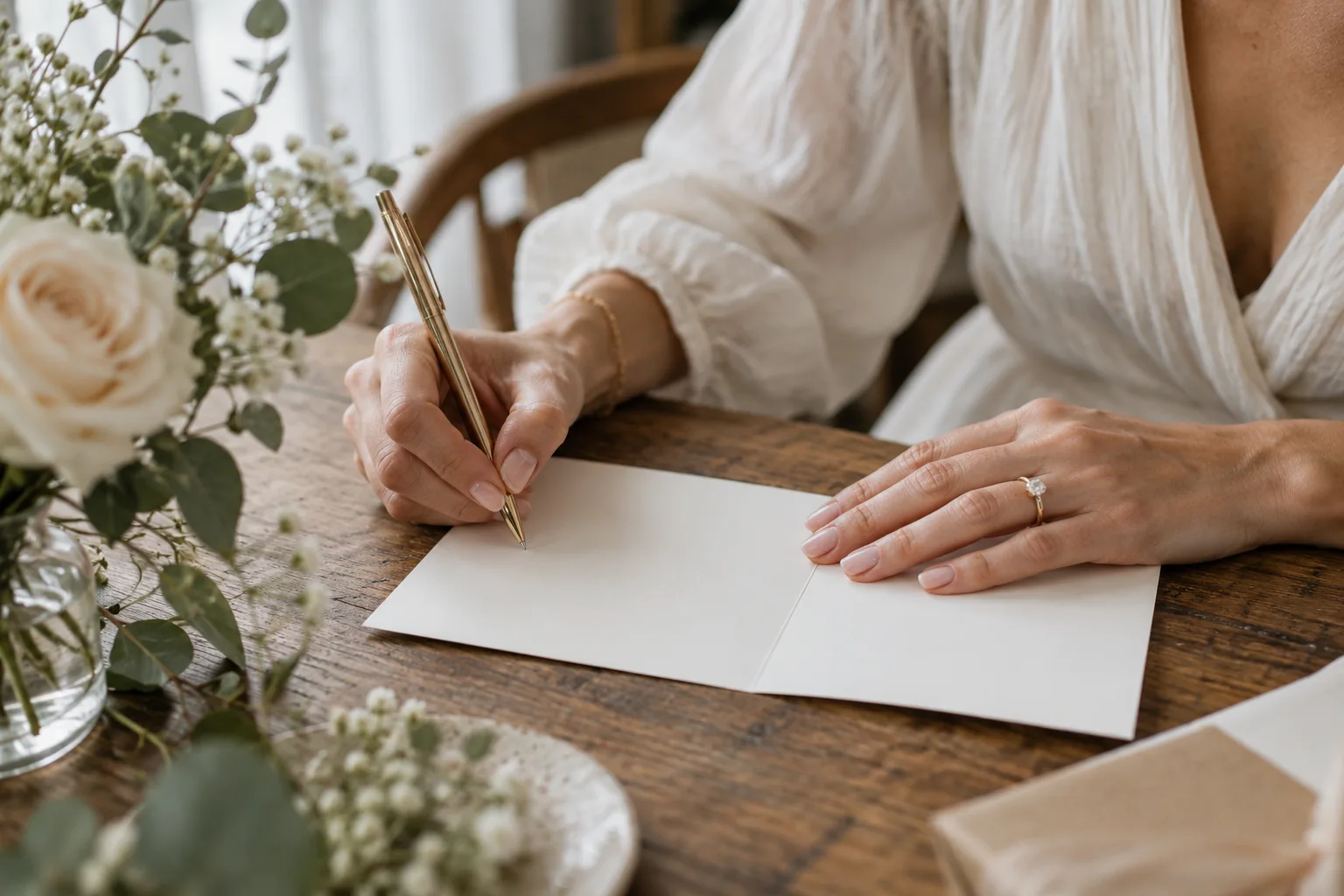
A three-part formula when the page feels blank
First, name the occasion: “Congratulations on your wedding.” Next, write one sentence about the couple, a shared memory or something you appreciate. Finish with a wish that looks ahead. You can keep the entire message to three sentences and still make it feel personal.
For example: “Congratulations, Jamie and Alex. I love the way you make room for each other’s ideas, even when they are completely different. Wishing you a home full of laughter, good conversations and people you love.” The specific middle sentence does most of the work.
If you know only one partner well, address both and avoid making the card entirely about your friend. “It has been lovely seeing you build a life together” is warmer than a long account of your own history with one person. You do not have to pretend to know the other partner intimately.
Short messages that still feel thoughtful
A brief card works well with a gift, for a colleague or when the couple will receive many messages. Write a complete thought rather than stacking unrelated compliments. Use their preferred names and check spelling before putting pen to paper.
Try: “Wishing you a marriage filled with kindness, laughter and a little adventure. Congratulations to you both.” Or: “So happy to celebrate this day with you. May the ordinary days ahead feel just as full of love.” Another option is: “Here’s to the life you are choosing together, and to many joyful moments along the way.”
A short message can acknowledge the wedding atmosphere without praising an event that has not happened yet. Before the day, say “We are looking forward to celebrating with you.” Afterward, mention something you genuinely enjoyed. Avoid describing the ceremony as perfect if you did not attend.
“Congratulations to you both. I hope your life together holds good conversations, generous kindness and many ordinary days you are glad to share.”
An original message to adapt in your own voice
For a close friend
Friendship gives you room for a memory, but choose one the couple can enjoy reading together. A story about your friend’s kindness or determination usually ages better than a joke about former relationships. Keep the memory short enough that the card remains a celebration of the marriage.
“From our first shared apartment to this wonderful new chapter, I have loved watching you build a life that feels like you. Seeing you and Morgan choose each other makes me so happy. Wishing you patience for the difficult days and plenty of reasons to laugh on the good ones.”
For a lighter tone: “You have always made everyday plans feel like an adventure. I hope married life brings you both more excellent snacks, unexpected detours and stories worth retelling. So happy for you.” Remove the joke if it would need an explanation or embarrass either partner.
For family, without giving a speech
A family card can be affectionate without making claims about what marriage should look like. Welcome a new family member if that wording suits the relationship, and recognize both partners as adults making their own choices. Avoid advice that sounds like a correction disguised as a blessing.
For a sibling: “It means so much to stand beside you on this day. I am grateful for our history and excited to see the life you and Casey build together. You both have my love and support.” For a child: “Watching you make this commitment is a joy. We wish you a marriage in which you both feel heard, valued and free to grow.”
If family relationships are complicated, a simple warm wish is enough. You are not required to resolve difficult history inside a wedding card. Keep the message focused on goodwill, and leave sensitive conversations for a private setting at an appropriate time.
For colleagues and people you know less well
Use a friendly, respectful tone and avoid assumptions about religion, children, surnames or household roles. “Congratulations to you both. Wishing you a happy wedding day and a wonderful life together” is entirely suitable. A restrained message can still be sincere.
In a group card, each person can add one short line instead of repeating the same lengthy congratulations. “Wishing you many happy adventures together” or “Hope you have a lovely day celebrating with your favorite people” gives the card variety. Sign clearly so the couple knows who wrote the message.
Do not include office jokes, private work information or comments about time away unless the couple would welcome them. If a collection accompanies the card, keep financial details outside the personal message. The card should not read like a receipt.
Religious wishes, humor and sensitive situations
Religious language is appropriate when you know it is meaningful to the couple. Use their tradition rather than importing your own by default. A simple blessing can be warm, but a prayer or quotation should be accurate and welcome. If you are unsure, wish them love, strength and a supportive life together.
Humor works best when both partners are included in the affection. Avoid warnings about marriage, jokes about divorce or suggestions that one partner is settling. A gentle reference to their shared enthusiasm for hiking or cooking is safer than a joke built on stereotypes.
For a remarriage, celebrate the relationship in front of you without comparing it with an earlier one. If someone important is absent or has died, acknowledge that only if you know the couple would appreciate it. A card can hold tenderness, but it should not unexpectedly turn into an account of grief.
If you cannot attend, keep the focus on them
Write your congratulations before explaining your absence. “We are sorry we cannot be there, but we are thinking of you both and wishing you a beautiful day” is enough. A long explanation of scheduling problems makes the message about you instead of the couple.
Send the card to the address the couple provided, or follow their stated gift arrangements. Do not assume the venue will safely receive and store mail. If the wedding has already happened, send the message anyway: “Belated congratulations” is better than letting embarrassment prevent a thoughtful note.
For more wording inspiration, browse messages and wishes for people you love, then adapt an idea to your own voice. Inspiration is useful; a specific sentence about the couple is what makes the final card yours.
Read it once before sealing the envelope
Check names, pronouns, spelling and the signature. Read the message aloud. If a sentence feels too grand or unlike you, simplify it. Remove advice the couple did not request and predictions about babies, careers or where they will live. Warmth does not require certainty about their future.
Write on a separate sheet first if the card matters to you and you are worried about mistakes. Choose ink that will not smear and give it time to dry. If several people are signing, leave enough space and agree who will deliver it.
You can use the same approach for an engagement celebration note or a private letter on the wedding morning. Name the moment, add something true and offer a kind wish. Those three things are enough.