Couple style
Matching Couple Outfits: Tasteful Ideas for Newlyweds
Matching outfits can be playful without making every item identical. For newlyweds, the most wearable approach is usually coordination: a shared color, similar texture or small detail that connects two different looks. Start with clothes you both enjoy wearing. The aim is to feel comfortable together, not to persuade one partner to dress like the other.
Choose a shared detail, not a complete uniform
Pick one element to connect the outfits: navy, a warm neutral, denim or a similar knit texture. Let the rest reflect individual preferences. One partner might wear a navy overshirt and the other a navy sweater, with different trousers and shoes. The connection is visible without forcing identical silhouettes.
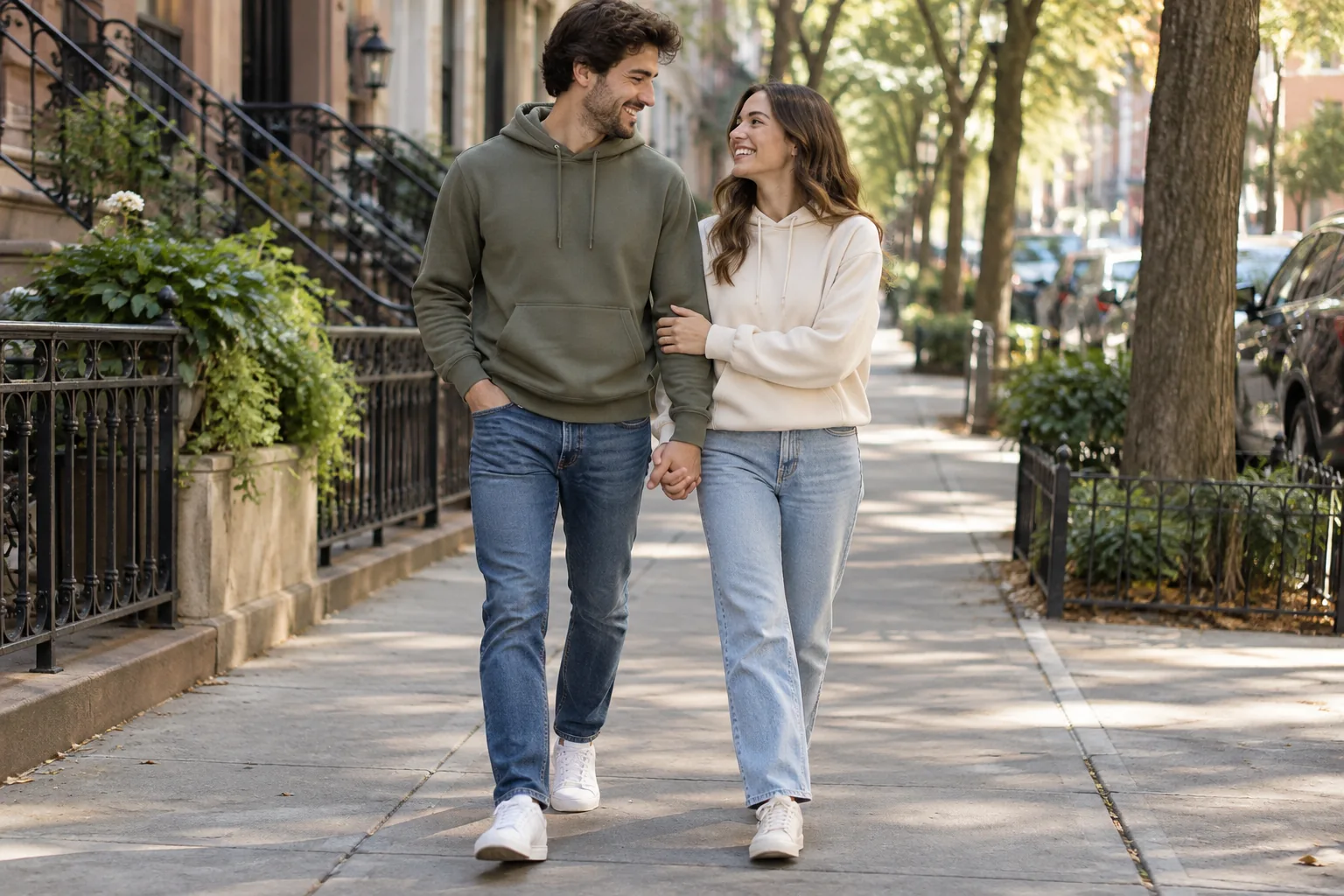
If you want a closer match, use one repeated item and keep the surrounding clothes simple. Two hoodies in the same color can work with different jeans; the same scarf can connect otherwise separate winter outfits. Avoid combining identical tops, bottoms, shoes and accessories unless the full matching look is intentionally your style.
Discuss what each of you would wear again on your own. That question is a useful filter before buying. An outfit that works only for a single photograph may be less satisfying than a familiar piece you can use on ordinary weekends.
Build a color palette from your existing wardrobes
Lay out a few clothes you already like and look for overlap. Start with two main colors and one accent rather than trying to coordinate every shade. White, blue and a small brown detail might be enough. Check the clothes together in daylight because indoor lighting can hide differences.
Colors do not need to match precisely. Different depths of blue or green can look intentional when the fabrics and surrounding pieces work together. If the shades are close but awkward, separate them with a neutral layer rather than buying another item immediately.
Use accessories lightly. A belt, bag or cap can repeat a color without taking over the outfit. Avoid choosing a palette that conflicts with one partner’s comfort just because it looks attractive in a mood board. The best starting point is what you both already reach for.
Travel outfits that work beyond the photograph
For a honeymoon journey or short trip, prioritize comfortable layers, usable pockets and shoes suited to walking. Think about the temperature at both departure and arrival. Coordinated outfits should make travel easier rather than introduce delicate fabrics or footwear you have not tested.
A shared hoodie color with different base layers is a simple option. A lightweight overshirt and cardigan in related tones can also work. Keep any personal details understated, especially if you prefer not to announce your wedding status to everyone around you.
Pack by outfits and expected activities, not only by individual pieces. Check that each layer works with more than one look. Leave room for ordinary changes of plan: a cooler evening, an unexpected walk or a meal that requires slightly smarter clothing. Do not assume a venue’s dress code from its photographs; check directly when it matters.
Casual matching without novelty overload
For coffee, a weekend walk or a relaxed anniversary, a small repeated detail is often enough. You could share a sweatshirt color, wear related stripes or choose complementary denim. Keep proportions comfortable for each person instead of trying to create symmetry.
If you like printed clothing, choose a design both partners would happily wear. Large slogans can become the focus of every photograph and may feel less versatile later. Check how a print looks at the actual size, where it sits on each garment and whether personalization can be corrected before ordering.
Browse matching hoodies and sweatshirts for couples as one source of ideas, then compare garment measurements, fabric details and the seller’s current shipping and return terms. This is a shopping reference, not a product test or a guarantee about quality, fit or delivery.
Smarter outfits can coordinate quietly
For a dinner or family occasion, connect colors across different garments rather than dressing both partners in the same formal shape. A tie might pick up a color in a dress, or a jacket might echo a partner’s blouse. Keep the connection subtle enough that each outfit still feels complete alone.
Match the level of formality more closely than the exact fabric. A tailored look next to very casual clothing can feel disconnected even if both are the same color. Start by checking the occasion’s expectations, then decide how you will interpret them comfortably.
Avoid copying wedding clothes for every later celebration. Newlywed style can be relaxed and personal. One familiar accessory from the wedding may carry meaning without turning dinner into a second ceremony. Choose a detail you enjoy wearing, not one you feel obliged to preserve publicly.
Fit and fabric matter more than the label
Sizing systems vary between brands and garment styles. Compare actual measurements with a piece that fits well instead of assuming the same letter size will work for both partners. Allow for the intended silhouette: fitted, regular or oversized. An oversized look should still let you move comfortably.
Read fabric and care information. Consider how the clothing will feel in your climate, how frequently it will need washing and whether you are willing to follow the care instructions. A matching pair becomes less useful if one item requires treatment neither person will realistically maintain.
Check personalization, return exclusions and estimated delivery before ordering for a trip or celebration. Do not leave a time-sensitive purchase until the last moment. Keep a backup outfit from your existing wardrobe so a shipping problem does not become a problem with the occasion itself.
Plan photographs around the setting
Think about where you will be photographed. Subtle textures and quieter prints may keep attention on the people; a bold color can work against a simple background. You do not need identical outfits to look connected. Natural posture and a comfortable activity often do more than precise color matching.
Choose a walk, a favorite café or a familiar neighborhood rather than a location selected only for appearance. Check permissions for professional photography where needed and avoid blocking paths or disturbing other visitors. Weather and access matter here as much as they do during wedding planning.
If photographs are part of a personal celebration, keep the session short enough that it does not dominate the event. Decide beforehand which images you want to share and which you want to keep for yourselves.
Give matching clothing thoughtfully
Clothing is a better gift when both recipients have a say in size, style and personalization. If you want to surprise a partner, choose a returnable item where possible or make the surprise an invitation to choose together. Do not assume enthusiasm for couple clothing because they enjoyed a matching wedding accessory.
For a wedding morning gift, make sure opening it does not require a last-minute outfit change. Our wedding morning guide explains how to place optional gifts around the real preparation schedule. A note explaining the shared memory behind an item can make it personal without adding more purchases.
Keep one shared detail, preserve each person’s comfort and buy only what you can see yourselves using. Coordinated clothing should be an enjoyable option in married life, not a dress code. The most convincing matching look is one you both chose willingly.